
Locust
Overview
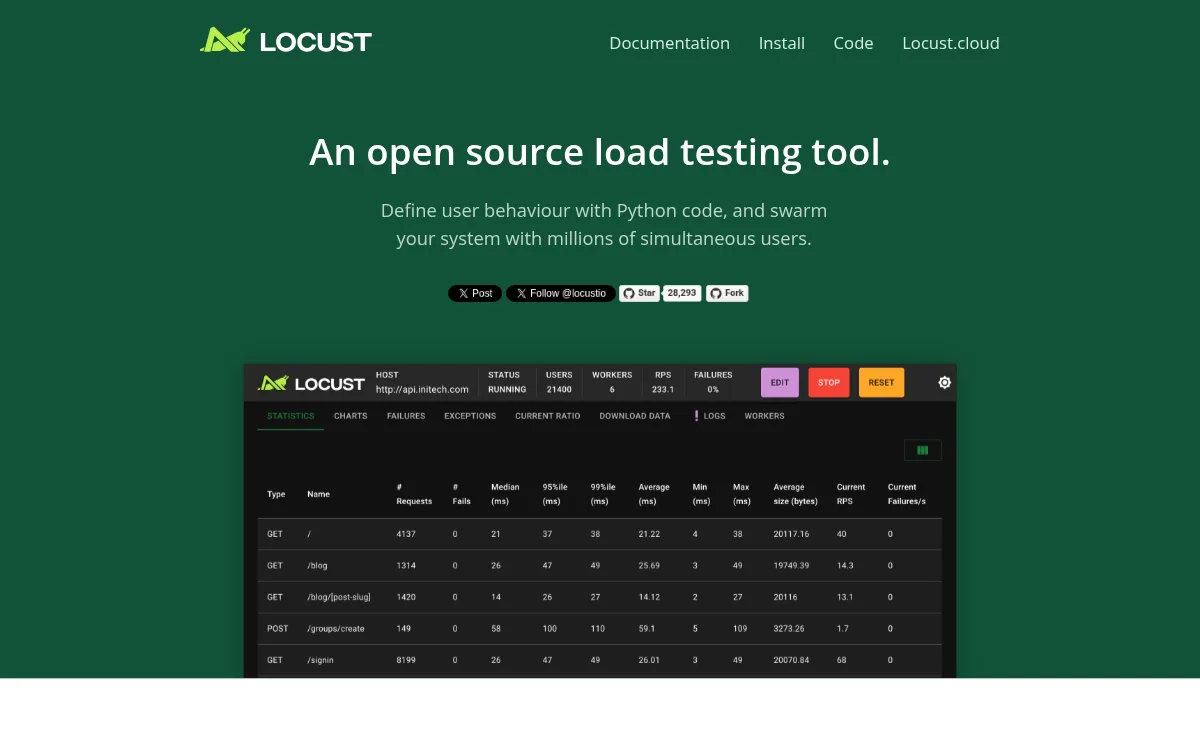
Locust is an open-source load testing tool that lets developers write user behavior scenarios in standard Python code rather than configuring tests through graphical interfaces or XML files. Test scenarios define actions, task weights and wait times between requests. Because tests are regular code, teams can import existing Python libraries, reuse helper logic and organize test tasks into nested sets to model realistic user journeys across websites and APIs.
The framework runs tests locally or distributed across multiple worker nodes to generate traffic from millions of concurrent simulated users. Tests can be executed through a built-in web interface for live monitoring, run directly from the command line or incorporated into automated workflows. It also supports running inside Docker containers and Kubernetes clusters, with an optional hosted cloud service available for running tests without managing local infrastructure.
Categories
Features
View all 10 featuresProduct Features
- Load testing
- Distributed load generation
- Test scripting in code
- Live test results
- CI/CD integration
Data & Hosting
- Open Source
- Self-Hostable
- Data Export
Pricing
We aim to show the cheapest entry price for each pricing plan. Where possible this is the monthly price, otherwise we show the per-month price billed yearly, or the yearly price when that is all the vendor lists. Usage prices are shown per unit.
See Locust’s pricing page for plan details.
Last checked November 17, 2026. Prices come from Locust’s website and may change. Confirm current pricing with Locust before you buy.