Angular
Overview
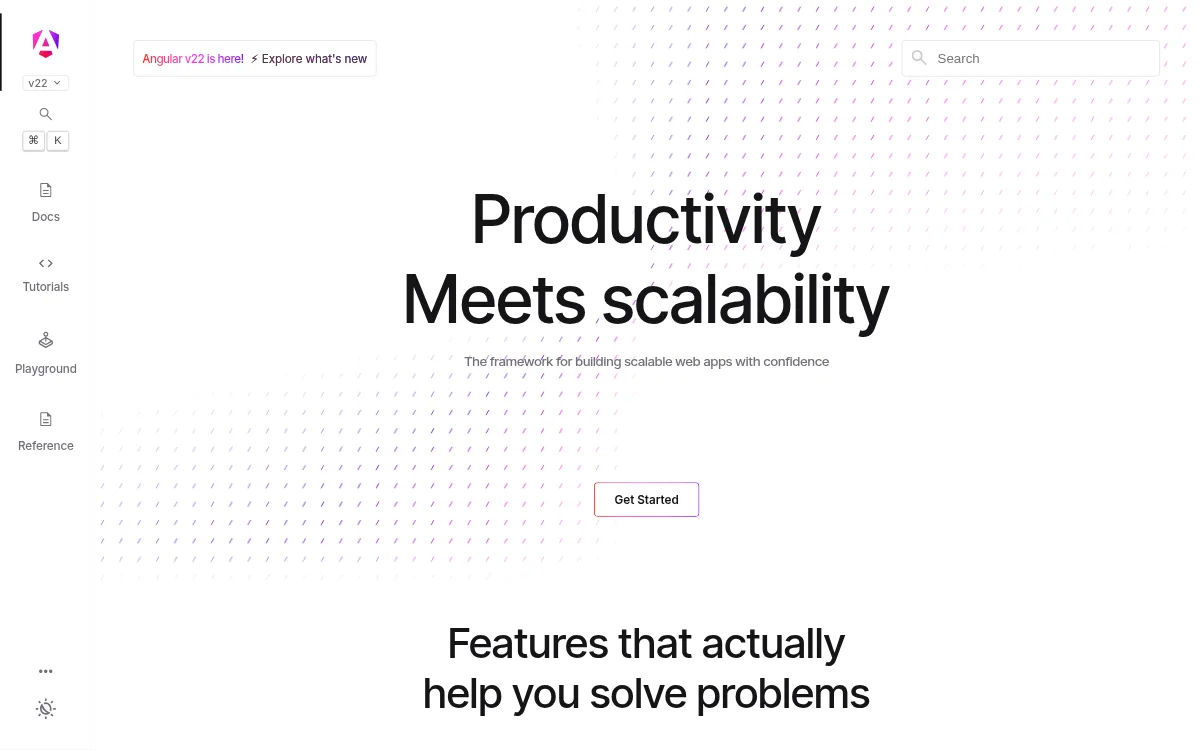
Angular is an open-source web development framework maintained by Google for building scalable web applications. It uses a component-based architecture supported by TypeScript, dependency injection and a template system. State management relies on Angular Signals, a fine-grained reactivity model that tracks data changes across views and updates the DOM without checking the entire component tree. The framework also supports server-side rendering, static site generation and full hydration.
Development teams manage projects through the Angular CLI, which uses Vite and esbuild to bundle code. The CLI includes automated code migrations through ng update to assist with major version upgrades. Additional first-party tools include browser DevTools for inspecting component hierarchies and profiling performance, along with language service extensions for editor diagnostics. Angular is published under an MIT-style license.
Categories
Features
View all 7 featuresProduct Features
- Server-side rendering
- Static site generation
- Hot module replacement
- Built-in image optimization
- View transitions
Data & Hosting
- Open Source
Pricing
We aim to show the cheapest entry price for each pricing plan. Where possible this is the monthly price, otherwise we show the per-month price billed yearly, or the yearly price when that is all the vendor lists. Usage prices are shown per unit.
See Angular’s pricing page for plan details.
Last checked November 12, 2026. Prices come from Angular’s website and may change. Confirm current pricing with Angular before you buy.
Use Angular with AI agents
Angular CLI MCP server
By Angular
- Hosting
- Local
- Tools
- 9
Alternatives to Angular






Frequently asked questions
- Showing 4 of 15 toolsView all 15 tools